
For the songs that made room for love, longing and the place you call home. We make this tee to remember Joan's words, his horses and the heart he carried from Juliantla.
The boy from Juliantla
Before the arena lights and the embroidered jackets, there was José Manuel Figueroa Figueroa, born in Juliantla, Guerrero, in 1951. As a child away at school, he began exploring poetry and music. The village he came from stayed close to his imagination; one of his earliest verses was about its mountains, sunlight and quiet nights.
He considered the priesthood before choosing a life in song. The boy who wrote about home became Joan Sebastian, a name heard far beyond Guerrero. Yet Juliantla remained part of his identity. Behind El Rey del Jaripeo was a writer whose attention kept returning to the people, places and feelings that shaped him.
A songwriter in the saddle
Joan wrote with a directness that made complicated feelings easy to recognise. Tatuajes, Secreto de Amor and Eso y Más each found a different way into love and longing. His catalogue moved through ranchera, grupera and Latin pop, while his compositions also found homes in the voices of Vicente Fernández, Lucero and other artists.
Onstage, that intimate writing met the scale of the jaripeo. The cowboy hat, the horses and the arena became part of a performance people could recognise at a glance. El Rey del Jaripeo was a horseman as well as a singer; the spectacle belonged to the same rural world that remained close to his music.
His career earned four GRAMMYs and seven Latin GRAMMYs. Those honours recognised a remarkable body of work. The connection listeners made with it was more personal: a song that seemed to understand a separation, a promise or the person they still carried with them.
The songs stay with us
Joan Sebastian died on 13 July 2015. He left a catalogue of more than a thousand songs, with melodies that could travel between his own recordings and the voices of others. The writer remained present even when someone else stood at the microphone.
His two familiar names, El Rey del Jaripeo and El Poeta del Pueblo, hold different sides of the same life. One brings back the horse and the arena; the other asks us to listen to the words. Together they remember an artist who could fill a large stage while making a song feel close enough to belong to one person.
We include him here for that closeness. This tee carries the face and the energy people remember, while the archive makes room for the boy from Juliantla and the songwriter behind the image. Wear it for the songs you return to, and for whoever first played them for you.
In frame
-
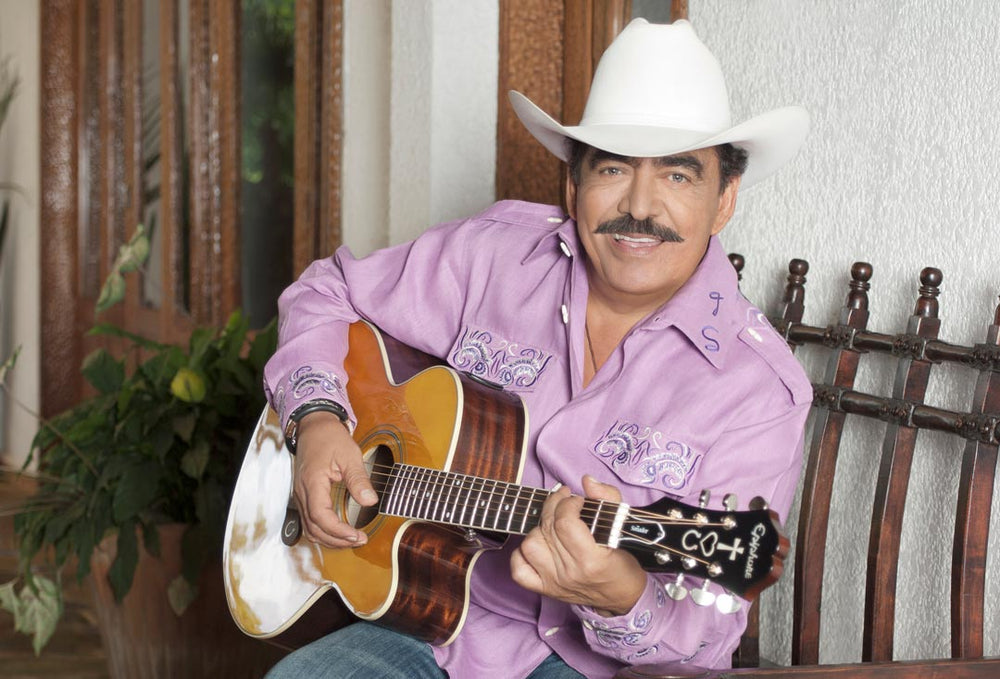
Joan Sebastian with his guitar
-
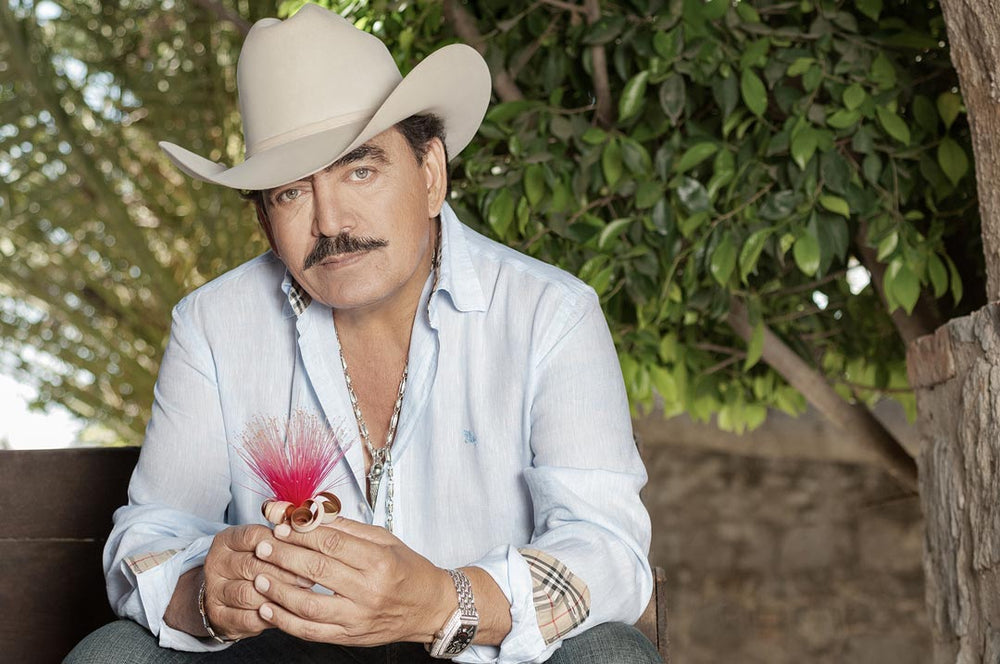
Joan Sebastian, an outdoor portrait
-
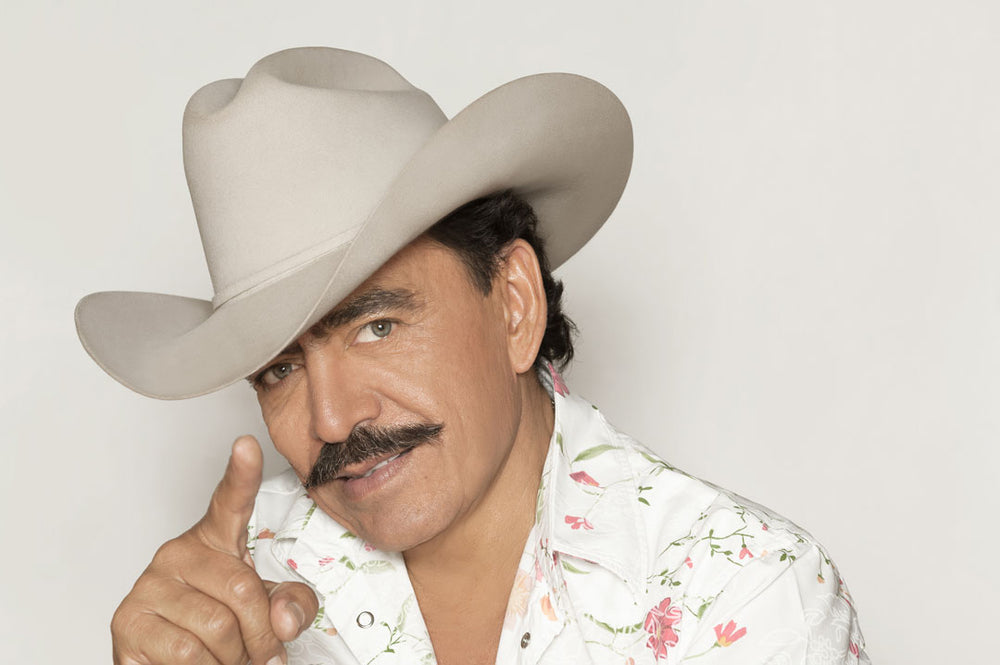
Joan Sebastian in a white cowboy hat
-
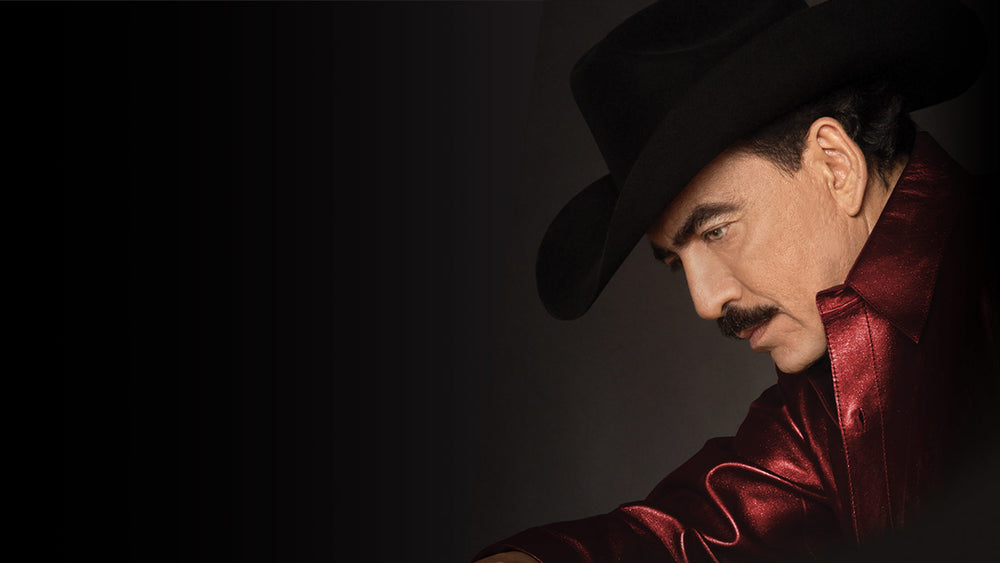
Joan Sebastian in black and red
-
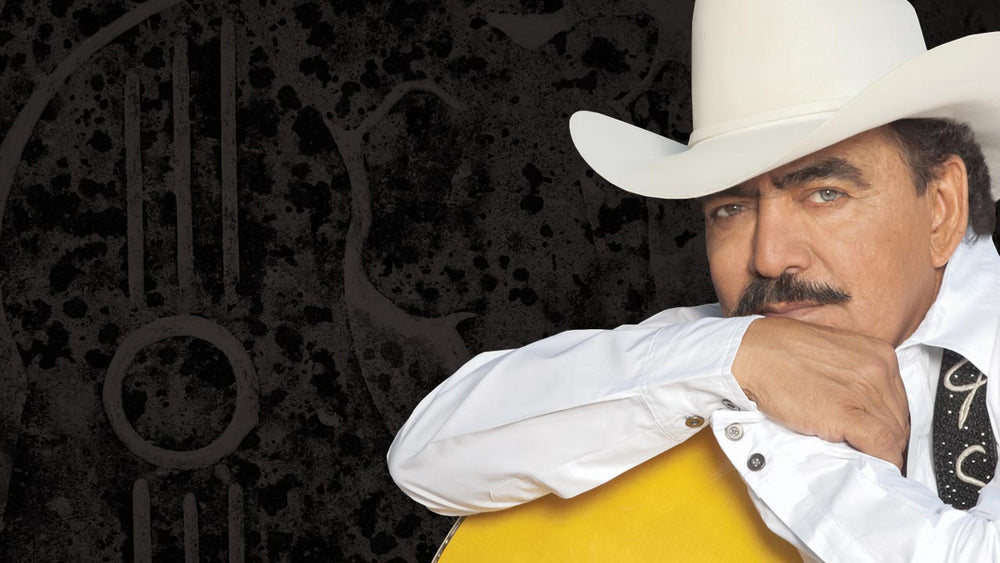
Joan Sebastian, guitar portrait
