
For the mothers we miss and the freedom to feel everything. We make this tee because Juan Gabriel gave so many of us a place to belong.
The child who had to invent a home
Before Juan Gabriel, there was Alberto Aguilera Valadez, born in Michoacán and raised through hardship in Ciudad Juárez. His mother struggled to support the family, and he spent part of his childhood in an institution. There he met Juan Contreras, a teacher who encouraged his music and became an important presence in his life.
Alberto learned, worked and wrote songs while trying to find a place for himself. The city that held those difficult beginnings would remain in his name and identity. Years before audiences sang back every word, music was already helping him turn loneliness into something he could share.
No Tengo Dinero
Recognition followed years of uncertainty and rejection. In 1971, No Tengo Dinero introduced his voice to a much wider audience. Its directness suited him: feeling came first, and people could hear themselves inside it.
As a songwriter, he moved across ranchera, ballads, pop and other traditions. His compositions found new lives with singers including Rocío Dúrcal. A Juan Gabriel song could leave his own voice and still carry his unmistakable understanding of longing.
Onstage, he made room for extravagance and tenderness. He danced, joked, cried and filled the space with a freedom many people recognised as precious. His 1990 performances at the Palacio de Bellas Artes brought popular music into one of Mexico's most celebrated cultural spaces. The grandeur never erased the sense of a person reaching directly for the audience.
Amor Eterno
Few songs hold grief as closely as Amor Eterno. For families who have used it to say goodbye, it belongs to a particular face, a particular room, a day that remains difficult to speak about. Juan Gabriel's gift was to write something that could become that personal to people he would never meet.
He died in Santa Monica in 2016, aged sixty-six. The public mourning was immense, but so were the quieter forms of remembrance: a recording played again, somebody singing while they worked, a familiar line suddenly carrying more weight.
We keep him in this archive for the home people found in his music. He made vulnerability visible and gave affection an enormous voice. This tee carries El Divo de Juárez, and with him the mothers, the friendships, the heartbreaks and the moments of freedom that listeners have placed inside his songs.
In frame
-
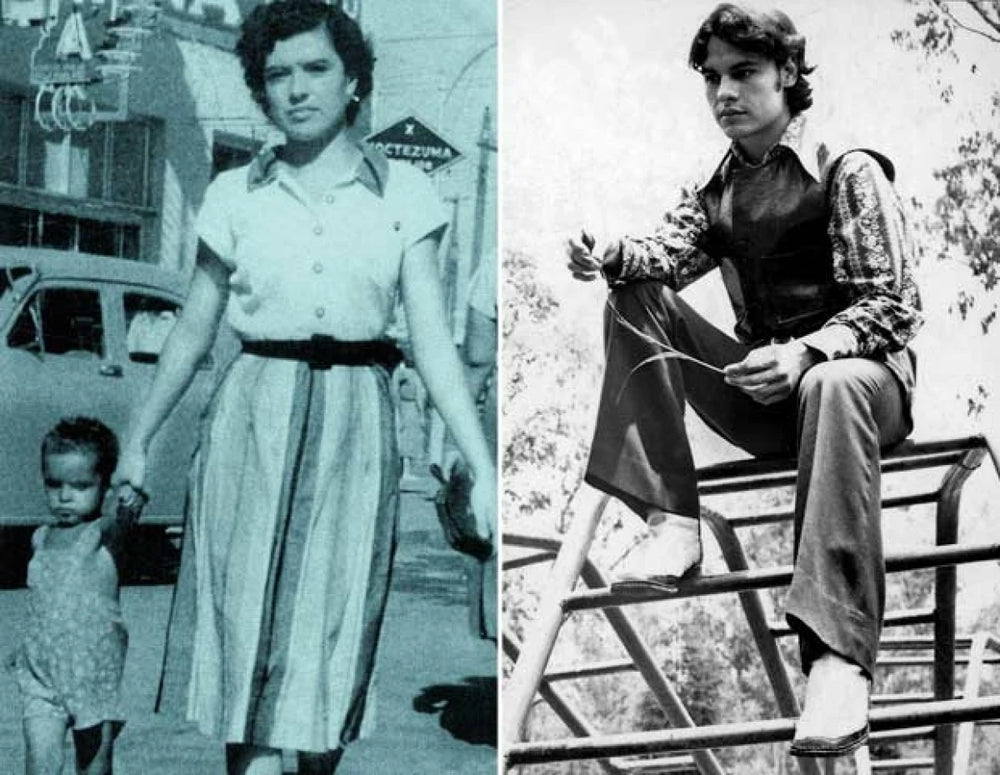
Alberto before Juan Gabriel: family and early music
-
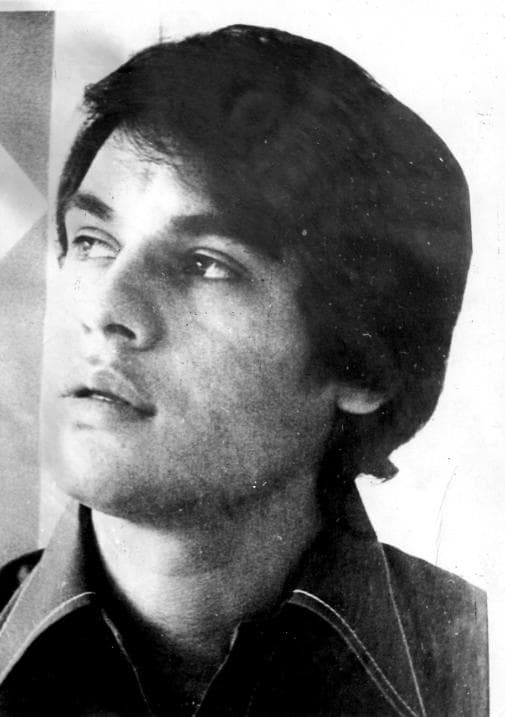
A young Alberto Aguilera
-

A family meal with his mother
-
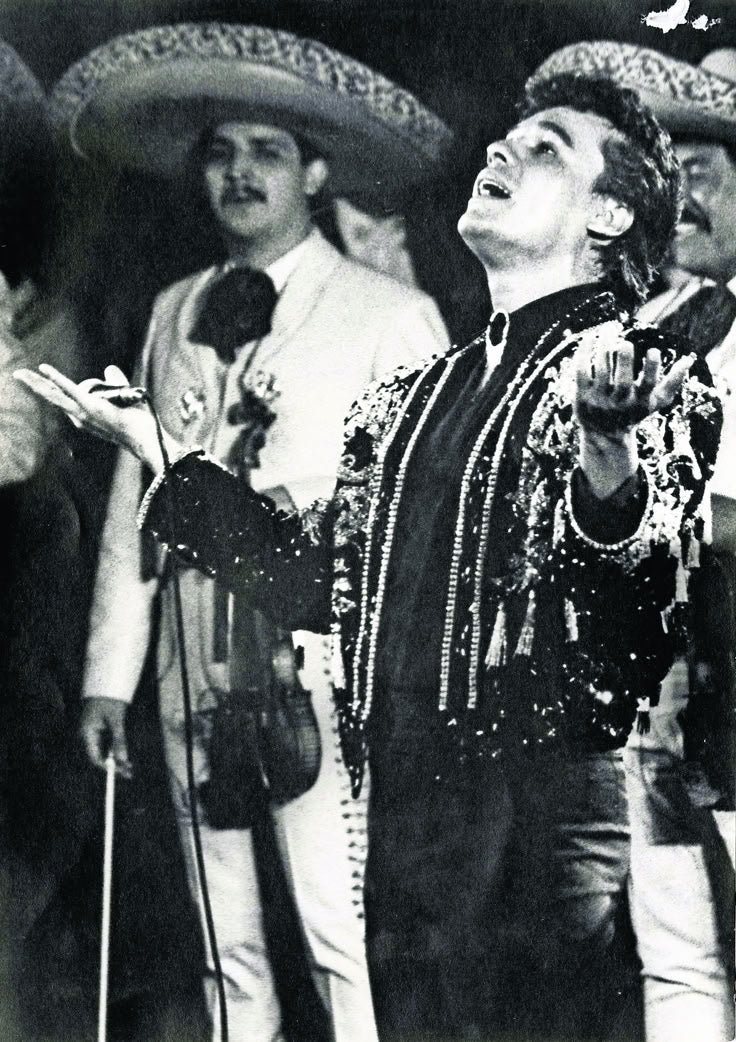
Bellas Artes, 1990
-

Juan Gabriel onstage, 2015

